> ## Documentation Index
> Fetch the complete documentation index at: https://docs.dojima.foundation/llms.txt
> Use this file to discover all available pages before exploring further.
# Architecture
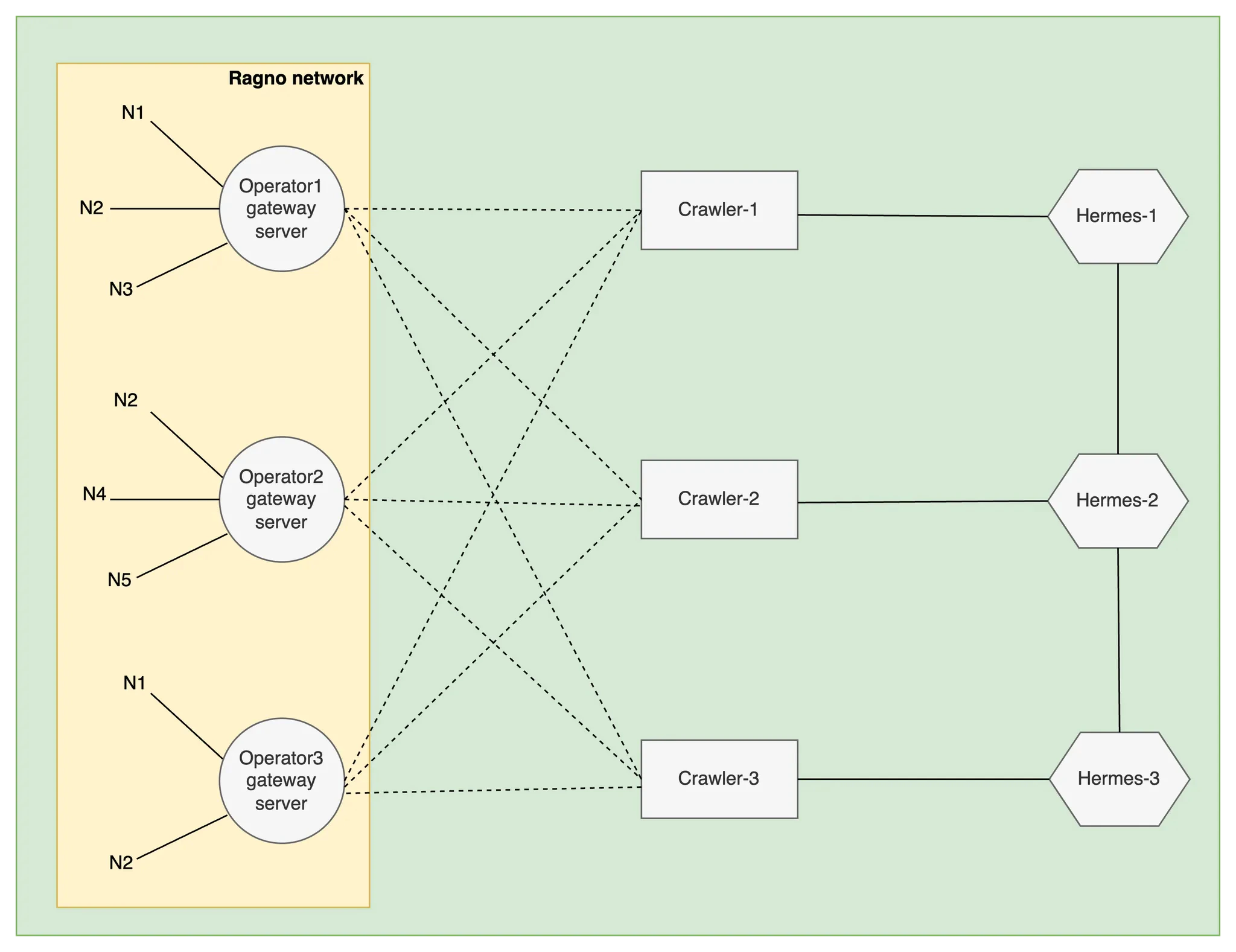 The main aim of ragno network(other than providing data to dojima cross-chain protocol) is to power data for several protocols in a fast, efficient and decentralised manner.
### Crawler
The main aim of ragno network(other than providing data to dojima cross-chain protocol) is to power data for several protocols in a fast, efficient and decentralised manner.
### Crawler
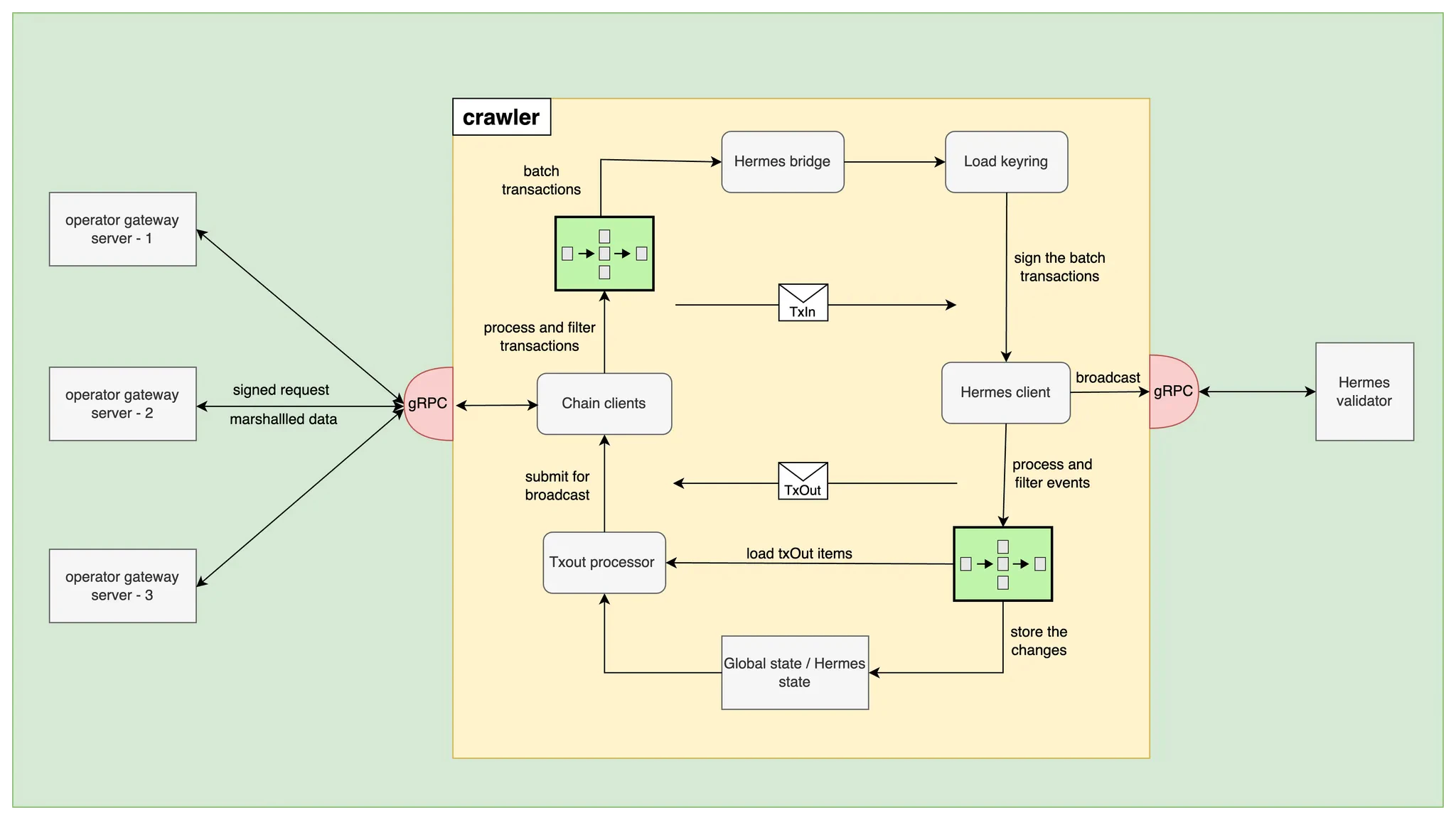 * The **crawler node** is responsible for fetching and filtering data from multiple blockchains, specifically focusing on identifying **Dojima cross-chain transactions**.
* It operates in conjunction with a **Hermes node**, connected via a secure bridge. This enables a secure and optimized way to transfer filtered transactions to the Dojima cross-chain protocol.
* The crawler node interacts with the network by accessing data from operator gateway servers, ensuring decentralization and efficiency.
### **Operator**
* **Operators** are essential participants in the Ragno Network. They host nodes from blockchains of their choice as part of the decentralized infrastructure.
* Operators must stake a minimum number of **\$DOJ tokens** to become part of the network.
* They are rewarded in \$DOJ tokens based on their contributions, particularly the data they provide to the Dojima cross-chain protocol.
### Operator dashboard
* The **crawler node** is responsible for fetching and filtering data from multiple blockchains, specifically focusing on identifying **Dojima cross-chain transactions**.
* It operates in conjunction with a **Hermes node**, connected via a secure bridge. This enables a secure and optimized way to transfer filtered transactions to the Dojima cross-chain protocol.
* The crawler node interacts with the network by accessing data from operator gateway servers, ensuring decentralization and efficiency.
### **Operator**
* **Operators** are essential participants in the Ragno Network. They host nodes from blockchains of their choice as part of the decentralized infrastructure.
* Operators must stake a minimum number of **\$DOJ tokens** to become part of the network.
* They are rewarded in \$DOJ tokens based on their contributions, particularly the data they provide to the Dojima cross-chain protocol.
### Operator dashboard
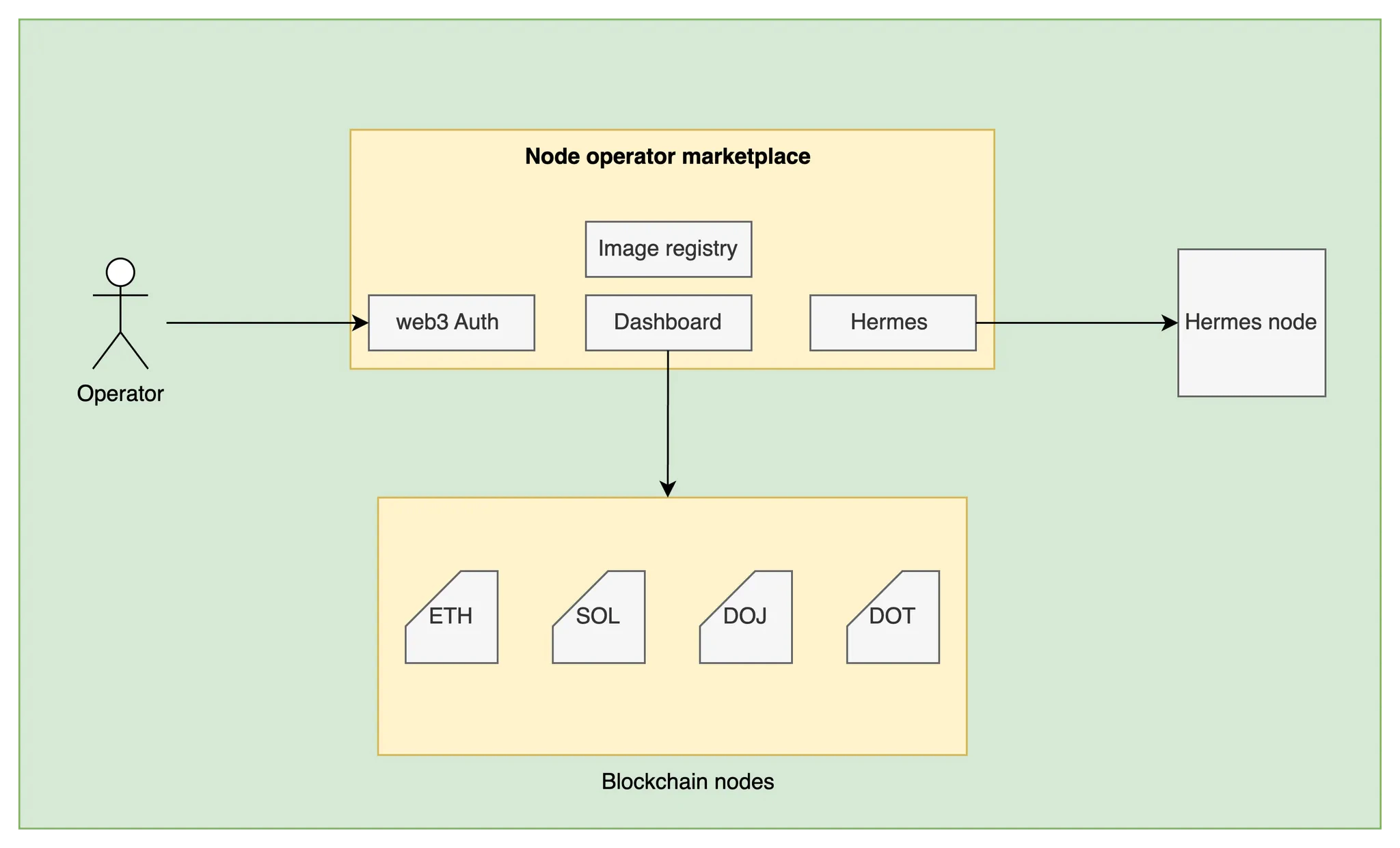 * The **Operator Dashboard** is a critical tool that enables operators to manage their nodes and monitor their performance.
* Key functionalities include:
* Registering new nodes.
* Monitoring node health and performance metrics.
* Tracking rewards earned through participation in the network.
* Operators can securely log in using their private keys and import nodes hosted elsewhere to earn additional rewards by contributing to the Dojima cross-chain protocol.
### Operator gateway server
* Once an operator becomes part of the network by staking, an **operator gateway server** is automatically set up.
* This gateway server acts as a **secure intermediary** between the operator's nodes and the crawler nodes.
* **Key functionalities** of the gateway server include:
* **Authenticating requests** from crawler nodes to fetch block data.
* **Verifying signatures** and mapping public keys with pairing lists.
* **Rate limiting, authentication, and caching** to ensure efficient and fair access to the data.
* The gateway server provides a reliable mechanism for operators to control access to their node resources while still contributing data to the Ragno Network.
### Working of the above setup
* **Hermes Chain** manages the identities and operations of all actors (operators and crawlers) within the cross-chain protocol.
* **Operators** register their nodes on the Hermes chain, while **crawler nodes** interact with the operators to fetch necessary data from the blockchains.
* Every **200 blocks**, Hermes maps crawlers to operators using a **Pairing List (PL)**:
* Each crawler submits a PL, which is aggregated and finalized by Hermes.
* The final PL is fetched by the crawlers, who can then request block data from the assigned operator servers.
* **Data Flow**:
* Crawlers can only request data from operators they are mapped to via the PL.
* Once crawlers fetch the data, they filter for Dojima cross-chain transactions.
* These filtered transactions are batched and sent back to the Hermes chain for further processing.
* **Rewards**: Operators claim their rewards for providing data, with the reward amount calculated based on the **compute units** they contribute to the network.
* The **Operator Dashboard** is a critical tool that enables operators to manage their nodes and monitor their performance.
* Key functionalities include:
* Registering new nodes.
* Monitoring node health and performance metrics.
* Tracking rewards earned through participation in the network.
* Operators can securely log in using their private keys and import nodes hosted elsewhere to earn additional rewards by contributing to the Dojima cross-chain protocol.
### Operator gateway server
* Once an operator becomes part of the network by staking, an **operator gateway server** is automatically set up.
* This gateway server acts as a **secure intermediary** between the operator's nodes and the crawler nodes.
* **Key functionalities** of the gateway server include:
* **Authenticating requests** from crawler nodes to fetch block data.
* **Verifying signatures** and mapping public keys with pairing lists.
* **Rate limiting, authentication, and caching** to ensure efficient and fair access to the data.
* The gateway server provides a reliable mechanism for operators to control access to their node resources while still contributing data to the Ragno Network.
### Working of the above setup
* **Hermes Chain** manages the identities and operations of all actors (operators and crawlers) within the cross-chain protocol.
* **Operators** register their nodes on the Hermes chain, while **crawler nodes** interact with the operators to fetch necessary data from the blockchains.
* Every **200 blocks**, Hermes maps crawlers to operators using a **Pairing List (PL)**:
* Each crawler submits a PL, which is aggregated and finalized by Hermes.
* The final PL is fetched by the crawlers, who can then request block data from the assigned operator servers.
* **Data Flow**:
* Crawlers can only request data from operators they are mapped to via the PL.
* Once crawlers fetch the data, they filter for Dojima cross-chain transactions.
* These filtered transactions are batched and sent back to the Hermes chain for further processing.
* **Rewards**: Operators claim their rewards for providing data, with the reward amount calculated based on the **compute units** they contribute to the network.